
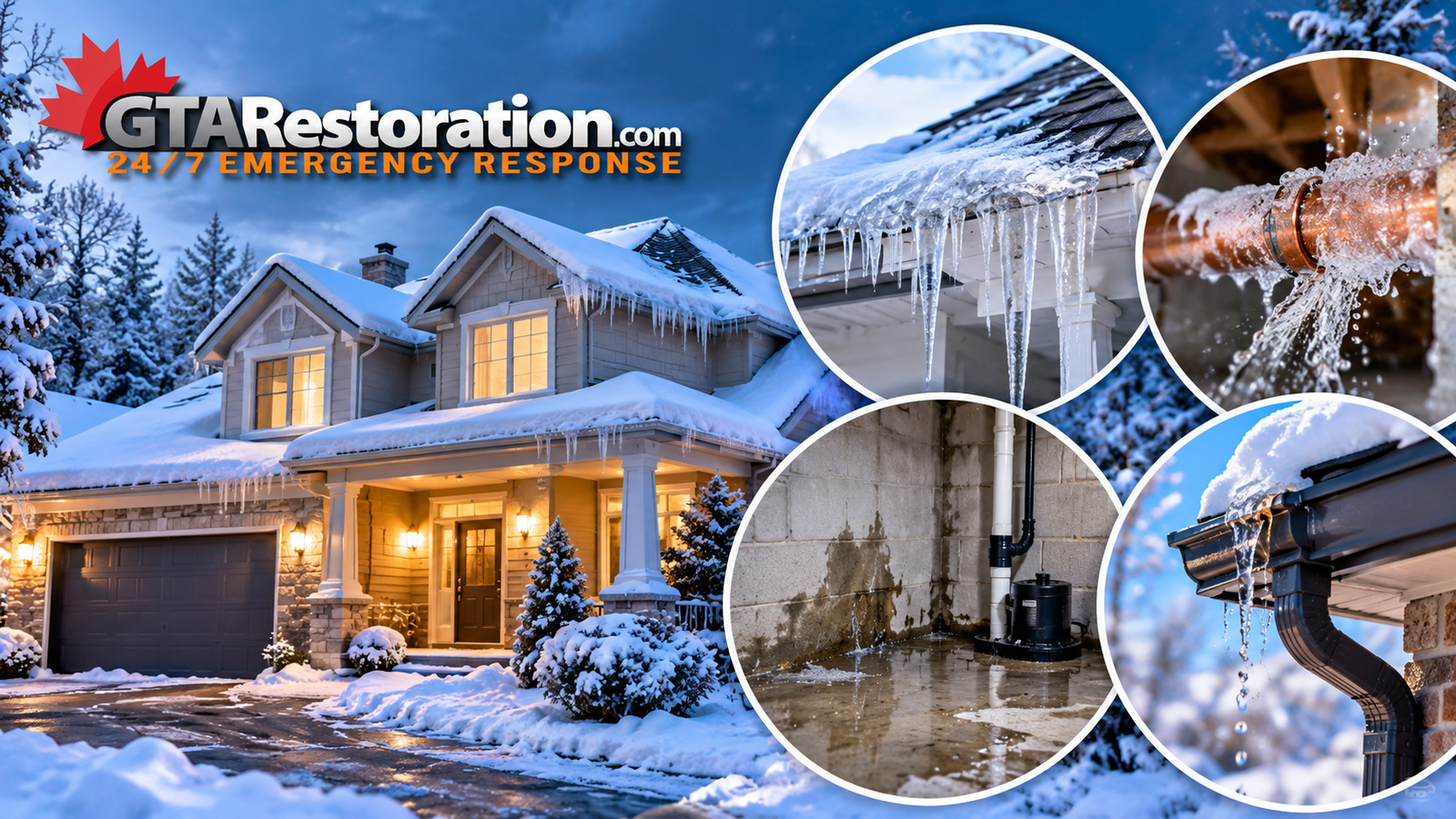
Tags: 24/7 water damage restoration, Emergency Roof Repair Toronto, Flooded Basement, GTA Restoration Service, Snow Water Damage, Toronto, Water Damage, Winter Water Damage,
For non-emergencies use our contact form


Emergency? 24-Hrs
416.800.0000Winter water damage often starts with a small problem that becomes worse during snow, ice or freezing temperatures. Therefore, inspect vulnerable areas before severe weather arrives.
Remove leaves and debris so rain and melting snow can drain properly. Also, make sure downspouts carry water away from the foundation.
Water should move away from basement walls. If low areas allow water to collect beside the house, correct the drainage before snowmelt begins.
Insulate plumbing in garages, crawl spaces, attics and areas near exterior walls. In addition, seal cold drafts that may lower temperatures around water lines.
Find the main shutoff before an emergency happens. If a pipe bursts, quickly stopping the water can greatly limit the amount of damage.
Check for damaged roofing, flashing problems and signs of previous leaks before snow covers the roof. Early repairs can help prevent winter water entry.
Look for wet insulation, staining, condensation or signs of roof leakage. Meanwhile, proper insulation and airflow can help manage winter moisture.
Melting snow can collect beside basement walls and windows. Therefore, keep drainage paths clear and watch areas where snow piles against the building.
If your basement uses a sump pump, make sure it operates before winter thaws. A working system can help move groundwater away from the foundation.
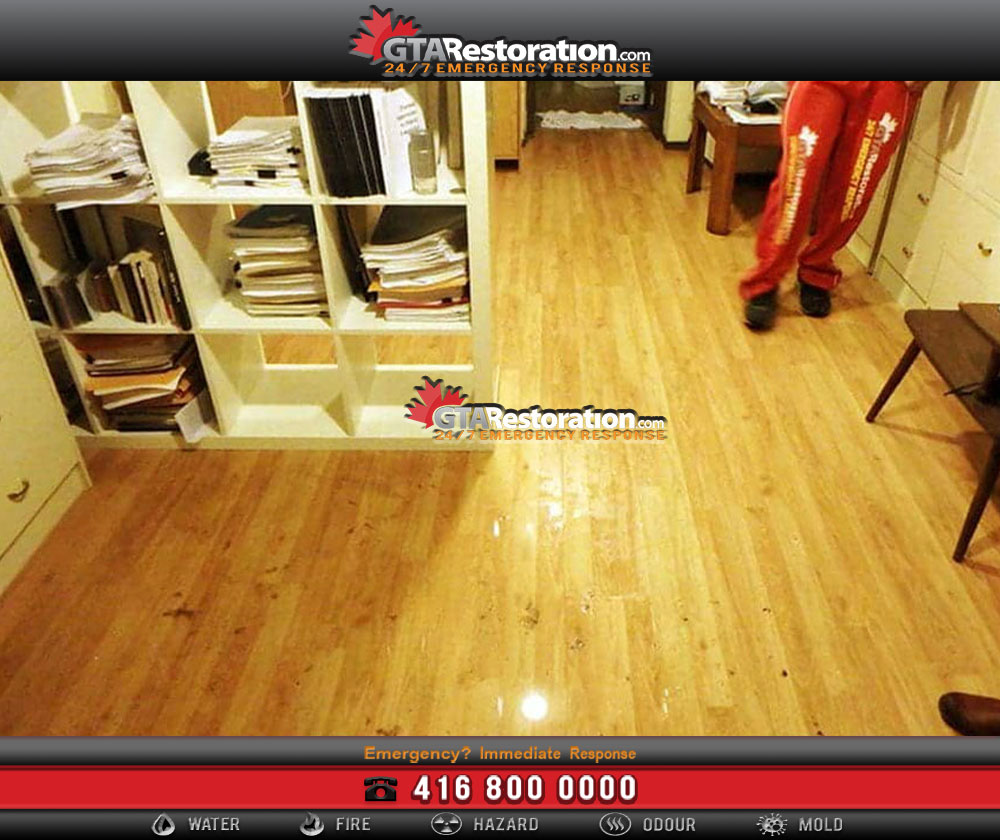
Moisture can remain behind walls or under flooring after a leak. As a result, professional moisture readings may be useful even when the visible surface appears dry.
GTA Restoration provides emergency plumbing, water extraction, moisture detection and structural drying throughout Toronto and the GTA. Fast action can help limit further damage after a winter plumbing leak, roof leak or basement water problem.
Get professional help locating the source, removing water and drying affected materials before moisture spreads farther.
Nationwide, Local Pricing
GTA Restoration offers local flood & water damage repair, mold removal/remediation, asbestos removal/abatement, fire/smoke damage repair services and much more.
Search
Common causes include frozen or burst pipes, roof leaks, blocked gutters, melting snow, foundation drainage problems and plumbing leaks.
Insulate exposed pipes, seal cold drafts, disconnect outdoor hoses, keep plumbing areas warm and know where your main water shutoff is located.
Yes. Snowmelt can collect near foundation walls or windows when grading and drainage do not move water away from the house.
Yes. Blocked gutters can prevent snowmelt and rain from draining properly, which may allow water to overflow near the roof or foundation.
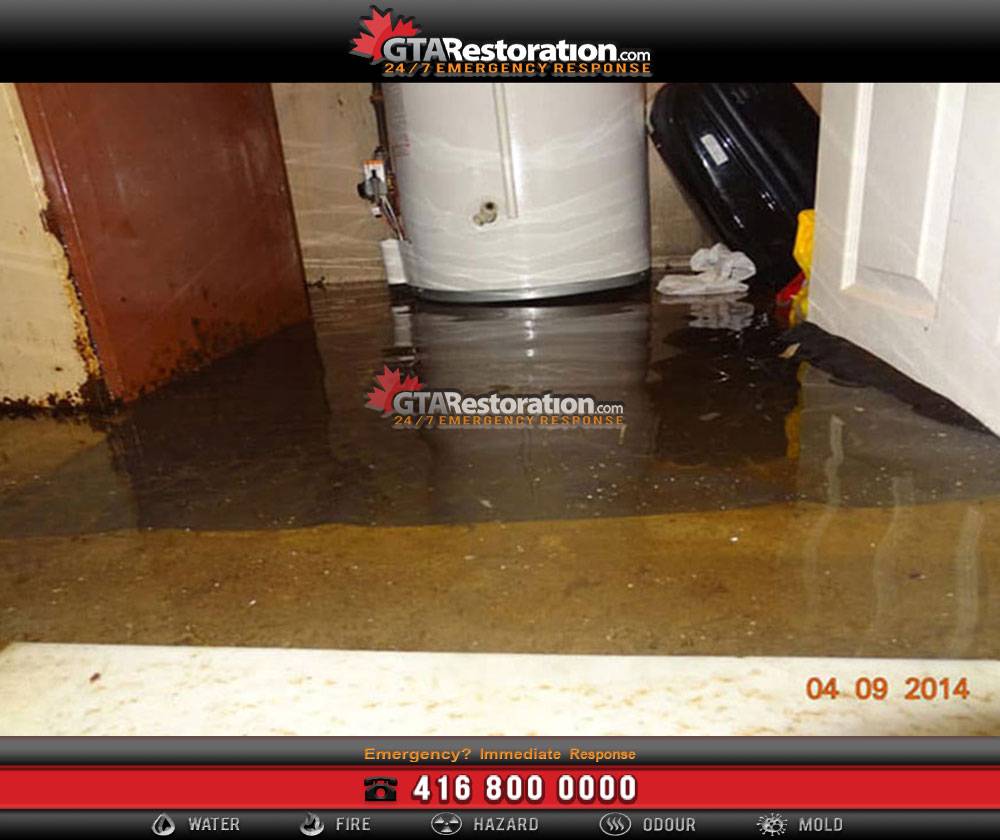
Stop the source when safe, avoid electrical hazards, document visible damage and arrange water extraction, moisture checks and structural drying when needed.
We Work Direct with All Insurance Companies
Wᴇ ᴀʀᴇ ᴄᴏᴍᴍɪᴛᴛᴇᴅ ᴏɴ ᴡᴏʀᴋɪɴɢ ᴡɪᴛʜ ᴇᴠᴇʀʏ ɪɴsᴜʀᴀɴᴄᴇ ᴄᴏᴍᴘᴀɴʏ ᴀᴄʀᴏss Cᴀɴᴀᴅᴀ & USA.
Learn more ↴ 
RELATED ARTICLES
follow us on 




Our Clients

Affiliates

Call Us 416-800-0000
Emergency? Immediate response 24/7
We cover all GTA 24/7.
Head Office:
250 Consumers Rd,
#10
Toronto, ON
M2J 4V6,
Open 24 hours
Downtown Office:
1 Toronto St,
#10
Toronto, ON
M5W 1A1,
Open 24 hours
For non-emergencies use our contact form
Not sure what you need?
Call us today to find the best product for your situation.
Head Office:
101 Lebovic Ave,
Unit #10
Scarborough,
ON, M1L 4T7
Hours
24-Hours Open
Downtown Office:
250 Yonge Street,
Unit #1A
Toronto,
ON, M5B 2L7
Hours
24-Hours Open
House Winter Water Damage and How to Prevent It
Get a quote today


You must be logged in to post a comment.